


Buying in Ontario: if I back out after paying the deposit, do I get it back?
Swipe for the 1 minute answer
Still conditional and a condition isn't met? Sign a Mutual Release and the deposit comes back. Already firm? You'll usually lose it.
- 01It sits in a brokerage trust account
- 02Released with a signed Mutual Release
- 03Or by court order
Counted from the later of the disclosure statement or the fully signed agreement. Resale homes have none unless your agreement says so.
The bank mixed the buyer up with someone of the same name. Both sides signed a Mutual Release, about $30K went back, and the house was relisted.
The buyer didn't close and the house resold for a lot less. The seller sued and won after over $30K in legal fees. The shortfall still isn't fully paid.
- 01Check when your conditions expire
- 02Give notice before the deadline
- 03Already firm? Talk to the seller
- 04Do the math before a Mutual Release
- 05Unsure? Have a real estate lawyer look
Tell Yifei where you are in the deal and when your conditions expire. He'll tell you straight what to do.
Ask YifeiWho actually holds the deposit
Not the seller. The deposit usually sits in a brokerage trust account. As Yifei puts it, there are only two ways to get it out: both sides sign a Mutual Release saying the deal is off and who gets the money, or a court orders it. So if the buyer wants out and the seller won't sign, the money stays where it is.
Where are you in the deal?
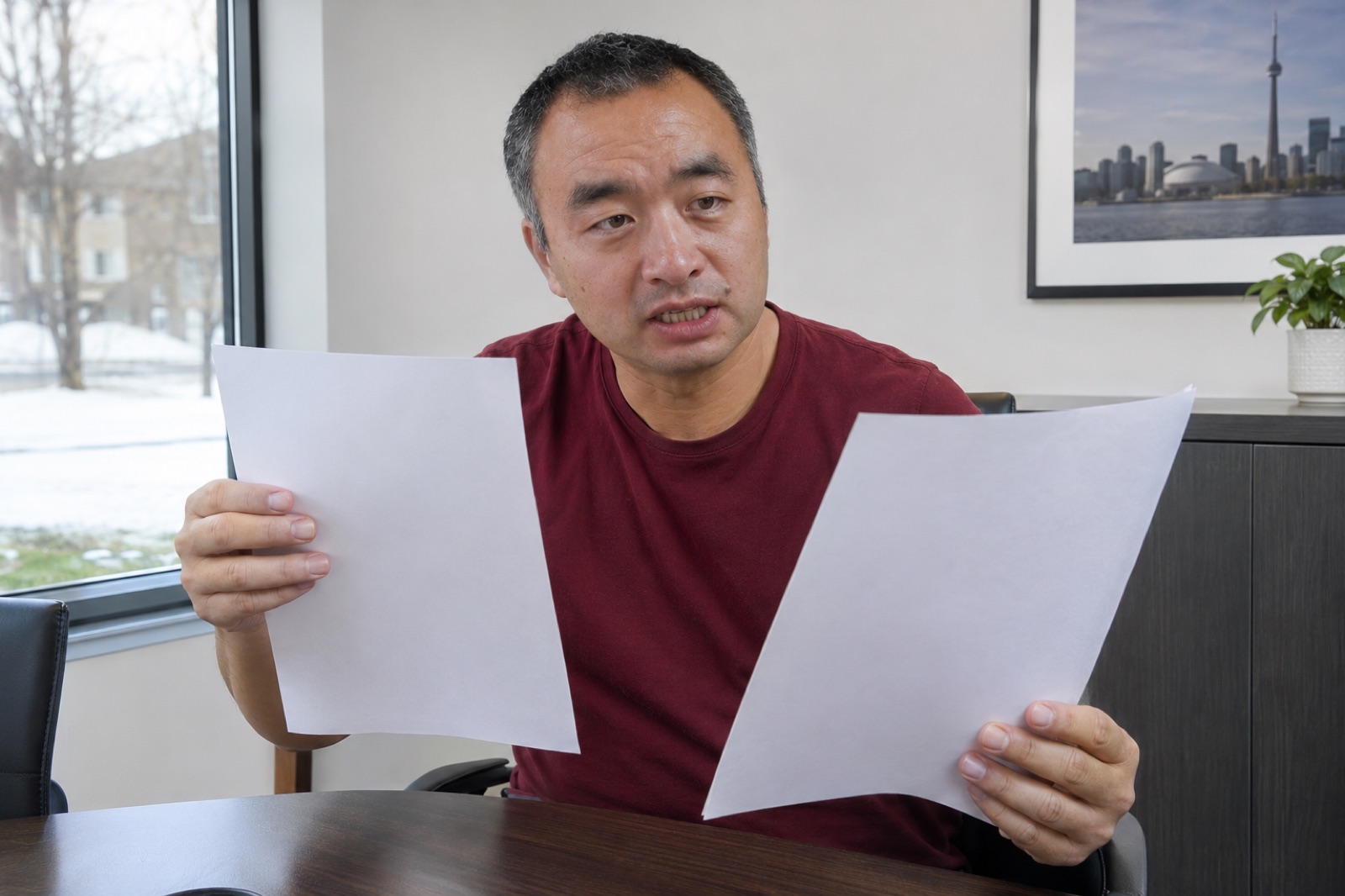
Two deals Yifei handled
Conditional deal that fell apart. This one is recent. A detached house sold for somewhere in the $600,000s. The inspection turned up an issue, which the buyer accepted. Financing was the problem: the bank had mixed the buyer up with someone else of the same name, showing him owing the bank a large sum, and the mortgage needed more time. Yifei and the seller chose not to wait. Both sides signed a Mutual Release, the deposit of around $30,000 went back to the buyer, and the house was relisted. It later sold again at about the same price.
Firm deal where the buyer didn't close. A seller had a firm agreement and a $60,000 deposit. On closing day, the buyer didn't show. The house couldn't sit empty, so it was resold for a lot less. The seller sued, paid over $30,000 in legal fees up front, and won. The deposit was recovered. The shortfall? The buyer said he had no money, and it still hasn't been fully collected.
The question buyers fear most is whether backing out means losing the deposit. These two deals answer it: the first was still in the condition period, and the money came back; the second was firm, the deposit went to the seller, and the buyer was pursued for the shortfall. Yifei handled both personally at RE/MAX.

If you want out, do this first
- Read your agreement: are you still in the condition period, when does it end, and what exactly does the condition say?
- If a condition genuinely isn't met, give notice the way the agreement requires, before the deadline.
- If you're already firm, talk to the seller instead of going quiet. Yifei once sold a house where closing was pushed back four times; each time the buyer signed an amendment and added to the deposit, and the deal still closed.
- Before signing a Mutual Release, be clear on how much of the deposit comes back and what else is agreed. Once it's signed, it's done.
- If you're unsure, pay a real estate lawyer to review the agreement.

Frequently asked questions
What if the seller won't sign the Mutual Release?
The deposit stays in the brokerage trust account. If you can't agree, it becomes a legal matter, so talk to a lawyer.
Is there a cooling-off period on resale homes?
No, unless your agreement has a written clause that lets you cancel. Ontario's 10-day cooling-off period applies to new condos bought from the builder, counted from the later of the day you receive the disclosure statement or the fully signed agreement. On a resale, anything you need protection for has to be written in as a condition.
If my mortgage isn't approved, am I in breach?
If you have a financing condition and you're still within the condition period, it's usually treated as the condition not being met. If you've already waived it, the consequences depend on your agreement, so have a lawyer look at it.
Where are you stuck right now? Tell me your situation, and I'll tell you straight what to do. Yifei (RE/MAX, efay.ai)
Sources
- RECO Registrar's Bulletin, Failed Agreements of Purchase and Sale: https://www.reco.on.ca/registrars-bulletin/failed-agreements-of-purchase-and-sale/
- RECO, Consumer deposit insurance FAQ: https://www.reco.on.ca/consumers/consumer-deposit-insurance/faq/
- RECO, Can I cancel a real estate deal before closing?: https://www.reco.on.ca/ask-joe-question/can-i-cancel-a-real-estate-deal-before-closing/
- Ontario, Condominium Act, 1998, section 73: https://www.ontario.ca/laws/statute/98c19
Yifei on this topic (video in Mandarin)
惊!安省购房毁约率竟然暴增500%?! · YouTube 一飞说地产