


In Ontario, should I deal with ice and icicles on my roof edge in winter?
Swipe for the 1 minute answer
Heat melts the snow from below. Water runs to the cold eave, refreezes and builds up, and the water behind it backs up under the shingles.
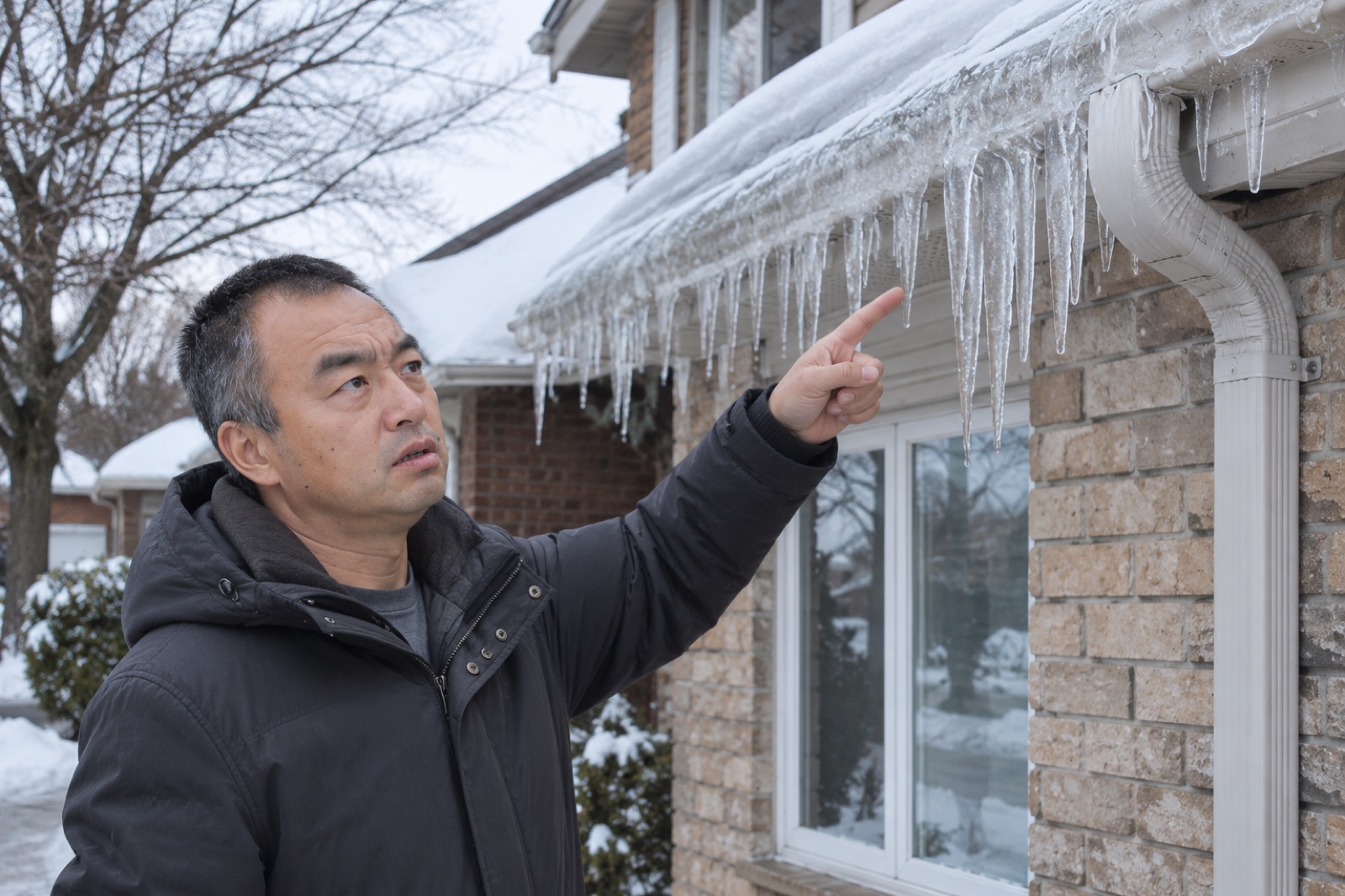
Buyers see the front photo first. A row of icicles makes people think roof problems.
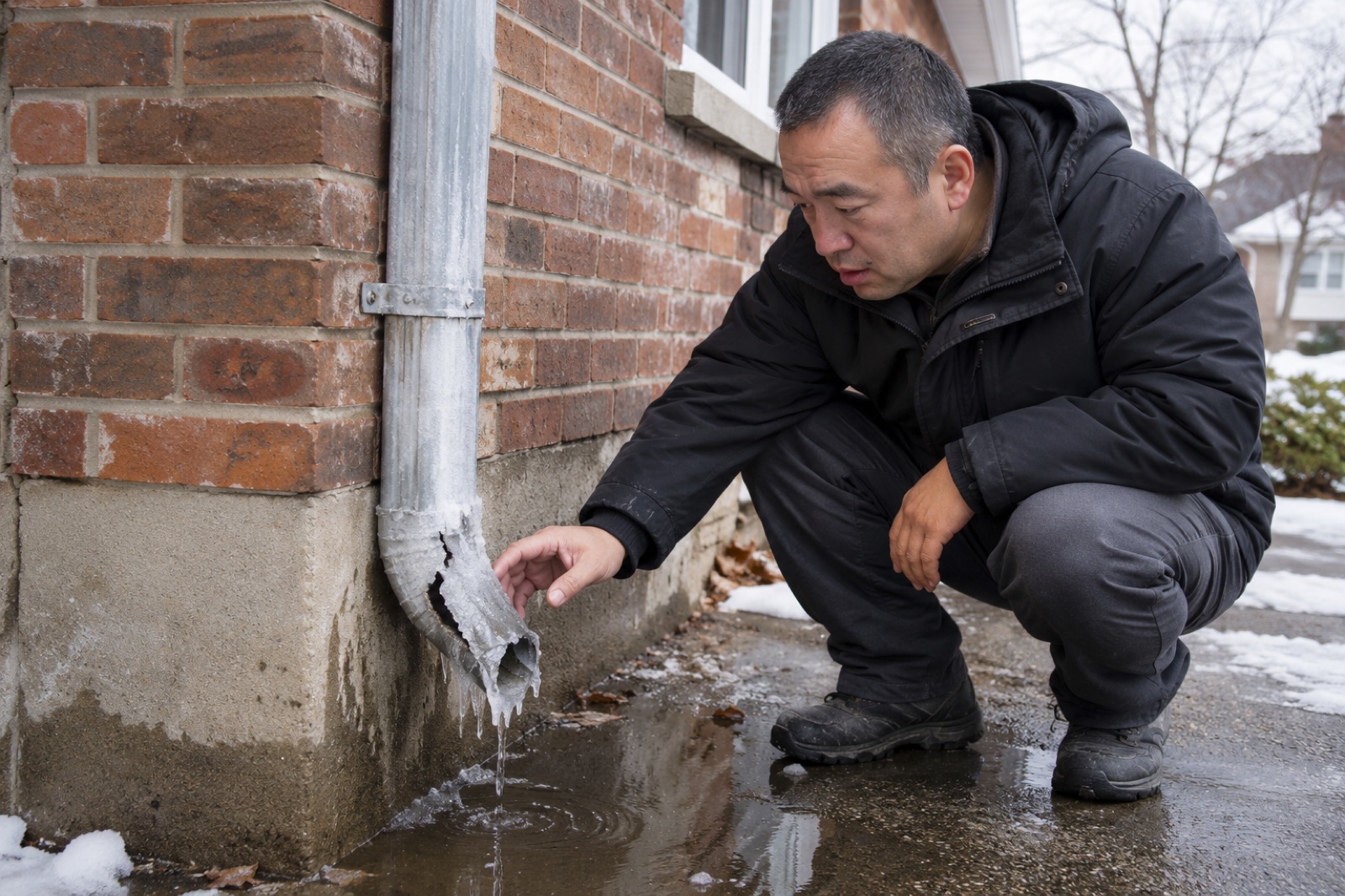
Ice inside the pipe won't chip out, and hitting it cracks the pipe. Make sure the outlet isn't dumping water at the foundation.
The eavestrough was too short, a design flaw a new roof wouldn't fix. By Yifei's estimate, heat cable cost about a tenth.
- 01Find where the attic leaks air
- 02Check the insulation is enough
- 03Look at ventilation while you're up there
- 01Walk the driveway and look up
- 02Knock down big icicles from the ground
- 03Never stand right underneath
- 04Frozen downspout? Aim the outlet away, don't bang
- 05Thick ice or stains inside? Call a roofer
Tell Yifei how old your house and roof are, and whether you plan to list in spring. He'll tell you straight what to do.
Ask YifeiIn Ontario, a few small icicles along the eaves are normal and nothing to panic about. Two things do need attention: big icicles over the front door, driveway or gas meter, which you should knock down while they're small; and a thick band of ice along the roof edge or water stains on your ceiling, which means an ice dam and a call to a roofer. Don't climb up and chip at it with a hammer; chopping at ice easily damages the roof surface.
Icicles vs. ice dams
How an ice dam forms: heat escaping from the attic melts snow from underneath, the water runs down to the cold eave and freezes, the ice builds up, and the water behind it gets pushed under the shingles.
What Yifei has seen
Listing a house for a seller, Yifei finished staging and interior photos, then noticed the eaves were lined with icicles. He had a roofer clear the icicles and snow, then went back to shoot the exterior. Buyers see the front photo first, and a row of icicles makes people think roof problems.
Another time, a client's downspout froze. Yifei first suggested breaking up the ice, then learned it was frozen inside the pipe and took that back: don't hit it, let it thaw on its own. When the client went outside, the downspout had already cracked and was dumping water right at the foundation. You can't chip ice out of a pipe, and water at the foundation is a bigger problem than the ice.
A third house iced up in the same spot every year. The roofer suggested heat cable or aluminum flashing, ideally replacing a section of eavestrough and adding an ice and water membrane, and figured that would fix about 80% of it. Yifei's take was that the eavestrough was too short, a design issue that a new roof wouldn't fix without reframing, which wasn't worth it. By his estimate, heat cable along the eave costs about a tenth of a new roof.
What to do now, in winter
- After a big snowfall, walk the driveway and look up. Knock down big icicles over doors, the driveway or the gas meter from the ground, and don't stand underneath.
- If a downspout is frozen, don't bang on it. Make sure the outlet isn't pointing at the foundation.
- Thick ice at the eaves or stains inside: have a roofer clear it. Stay off the roof.
- If part of the roof is sagging under snow, call a roofer. Yifei once saw a house with a section of roof that had no support underneath; the repair was about $1,000.
What to do in spring
Ice dams that come back in the same spot every year usually start in the attic: warm air leaking up from the house and not enough insulation, so heat reaches the roof. In spring, have someone check where the attic leaks air and whether the insulation is enough, and look at ventilation while they're up there. Heat cable can melt channels in the ice and sometimes eases the problem, but it uses a fair amount of electricity; the real fix is keeping house heat out of the attic. If the eavestrough is too short or too flat, then consider heat cable. A client once asked about spray-on shingle coatings; Yifei doesn't think they do much. Spend the money on the attic first.
Frequently asked questions
Do icicles mean my roof is damaged?
Not necessarily. A few small ones are common. Ice that keeps getting thicker, forms in the same place every year or causes stains inside is when to get the roof and attic checked.
Can I use salt to melt ice on the roof?
It's best not to throw rock salt on the roof yourself; the salty runoff may damage shingles, eavestroughs and plants below, depending on your roofing. Have a roofer handle it.
Does insurance cover ice dam leaks?
It depends on your policy. Take photos of any damage, then call your insurer.
Want advice for your own house?
The age of the house, the age of the roof and whether you plan to list in spring all change the answer. Tell me about your house and I'll tell you straight what to do: Yifei (RE/MAX), efay.ai.
Sources
- Natural Resources Canada (NRCan), Keeping the Heat In, section 5.5 Ice dams (pp. 66 to 68): https://natural-resources.canada.ca/sites/www.nrcan.gc.ca/files/energy/pdf/housing/Keeping%20the%20Heat%20In_e%20.pdf