


In Ontario, what should I do if a pipe or outdoor tap on an exterior wall freezes and bursts in winter?
Swipe for the 1 minute answer
Hose left on, indoor valve left open, water freezes in the wall. Plenty of people find out in spring watering the garden.
- 01Close the indoor valve, or the main
- 02Water near outlets? Call your utility
- 03Drain the outdoor tap and lowest faucet
- 04Take photos, keep clean-up receipts
- 05Call your insurer right away
- 06Call a licensed plumber
A couple of hours of work. With an outdoor tap, much of the bill is opening and patching the wall, so get one price for both.
When a buyer asks, you answer in one line. Keep the paperwork and photos together for when you sell.
- 01Disconnect the garden hose
- 02Close the indoor valve, then drain the tap
- 03Leaving it empty? Keep the heat on
Close the valve, open the tap, use a hair dryer or warm towels and stay with it. Still no water? Call a licensed plumber.
Each one changes what paperwork to keep. Tell Yifei your situation and he'll tell you straight what to do.
Ask YifeiIn Ontario, if a pipe or outdoor tap on an exterior wall bursts, shut off the water first: close the indoor valve for that tap, or the main shut-off if you can't find it. If water has reached outlets, wiring or the electrical panel, stay out of the water and have your power utility cut the power. Then take photos, call your insurer as soon as you can, and call a licensed plumber, and ask for one price that includes opening and patching the wall. Keep the receipt and warranty; you'll want them when you sell.
Why exterior-wall pipes split
An outdoor tap is fed by a short run of pipe through the wall. If the hose was left on and the indoor valve left open in the fall, water sits in that section, freezes and splits the pipe. You often can't tell while it's frozen. When it thaws, the water leaks inside the wall or into the basement ceiling. Plenty of people only find out in spring when they turn on the tap to water the garden.
What to do, in order
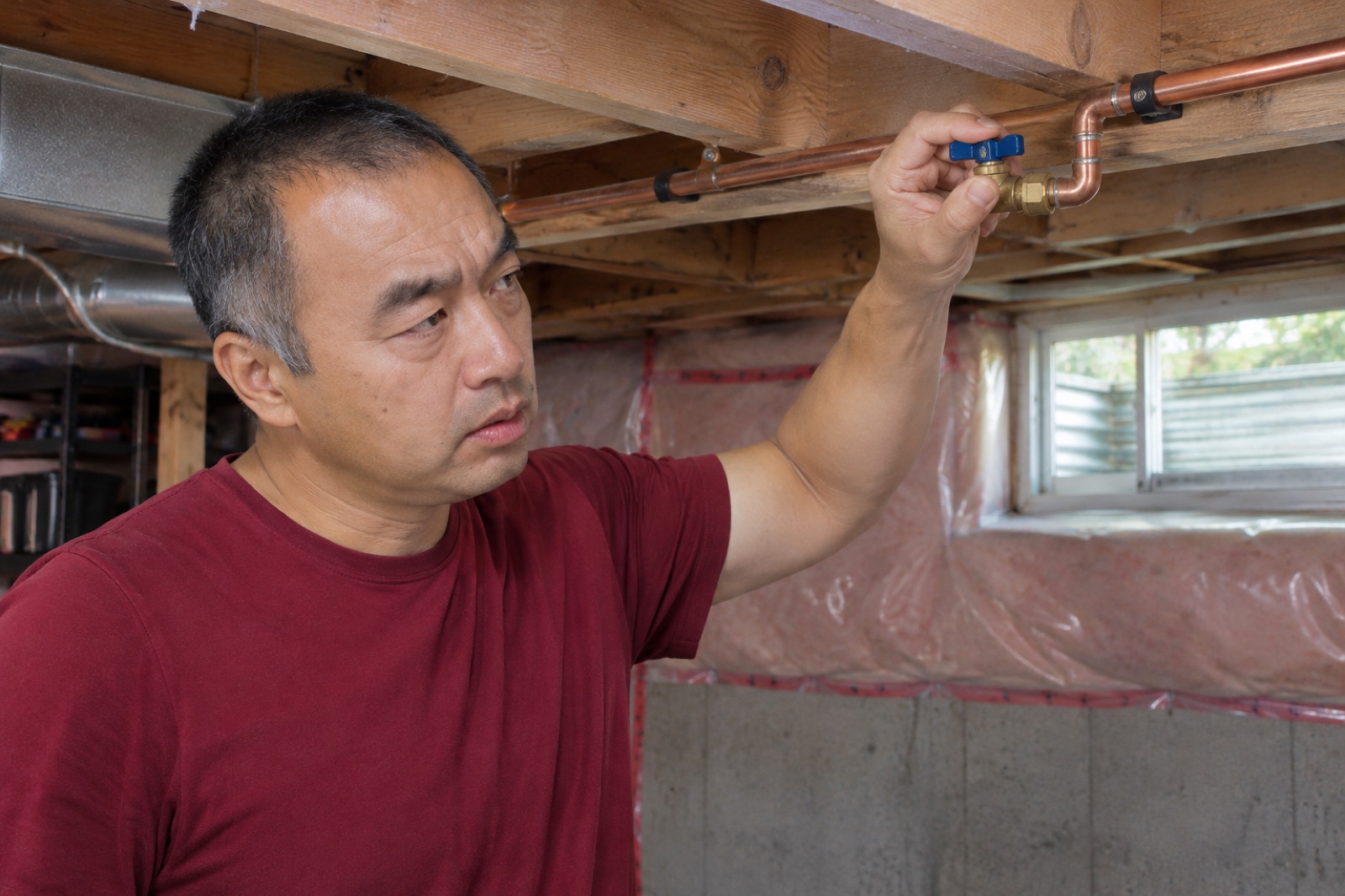
- Shut off the water. There's usually a small valve inside on the same wall, near the basement ceiling. If you can't find it, close the main shut-off, often near the water meter in the basement. It helps to find and tag it before anything happens.
- Deal with the power. If water is above outlets, touching wiring or near the panel, stay out of it and call your local utility to shut the power off (in Toronto, that's Toronto Hydro). Only switch off the circuit yourself if you can reach the panel from a dry spot. Have a licensed electrician check things afterward if needed.
- Drain the line. Open the outdoor tap and the lowest faucet in the house.
- Take photos of the leak, wet walls, floors and belongings, then dry things out with fans and move wet carpet and boxes. Keep receipts for emergency repairs and clean-up.
- Call your insurer right away to ask what's covered and what they need. Policies differ, and most insurers take claims around the clock.
- Call a licensed plumber.
What Yifei has seen
At one rental, a leak upstairs soaked through the ceiling below. Yifei had someone go up, find which unit was leaking and shut off the water before anything else, then check whether an earlier plumbing repair had a bad joint. Once the water is off, the damage stops growing and you can figure out the rest calmly.
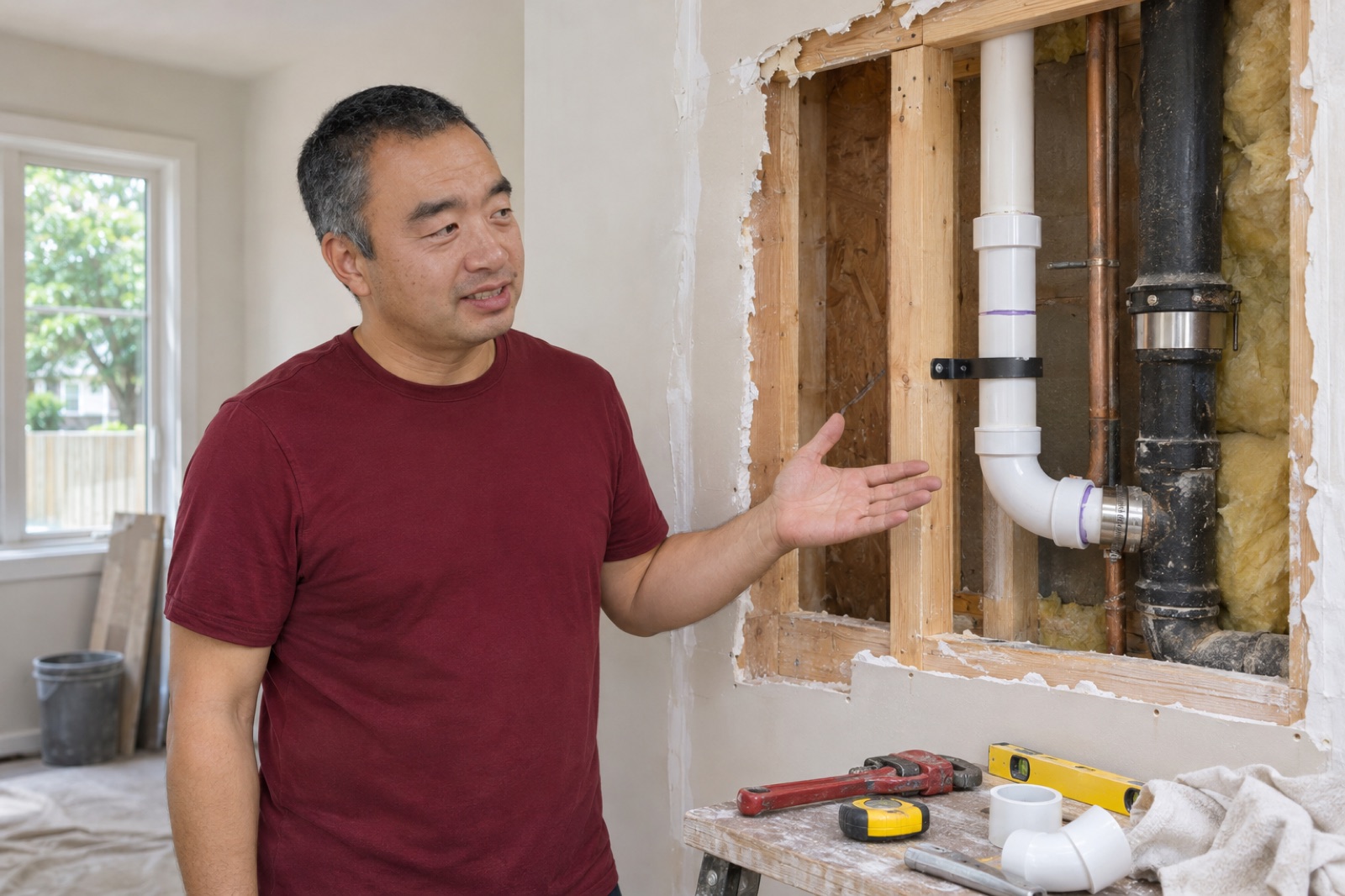
On cost, Yifei once asked a plumber about a cracked joint on a main drain: a few hundred dollars and a couple of hours, after measuring the pipe. With an outdoor tap, the pipe is usually inside the wall, so much of the bill is opening and patching drywall.
Yifei's advice: if you can't do plumbing yourself, hire a licensed plumber and get one price that covers the wall repair too. Splitting it between a plumber and a separate drywall person means nobody owns the problem if something goes wrong.
Keep the paperwork
On one house Yifei sold, the buyer's inspection found a cracked main drain in an unfinished basement. Without the inspection nobody would have known; the seller wasn't hiding anything. On another, the seller had already had a licensed plumber fix a crack and had the receipt and warranty, so the buyer's question was answered in one line. If you repair a pipe this winter, keep the receipt and photos together for when you sell.
Every year before the first freeze
- Disconnect the garden hose before the first frost.
- If there's a separate indoor valve, close it, then open the outdoor tap to drain it.
- Ask a plumber about a frost-free tap; you still need to remove the hose.
- Keep areas with water pipes, including near the water meter, above 8°C, and keep the heat on when you're away.
- If the house will sit empty, keep the heat on, shut off the water and drain the lines as your insurer requires, and ask how often someone has to check on it. During one snowy stretch in a past winter, Yifei went to an empty house and turned the heat on to keep the pipes from freezing.
Frequently asked questions
The pipe is frozen but hasn't burst. What do I do?
Close the indoor valve, open the outdoor tap and warm the section inside the wall slowly with a hair dryer, heating pad or warm towels, and stay with it. Skip open flames, torches and propane heaters; they're a fire and carbon monoxide hazard. If water still won't flow, call a licensed plumber; in Toronto you can also call 311.
Does home insurance cover a burst pipe?
It depends on your policy. According to the Insurance Bureau of Canada, standard home policies cover the resulting damage from frozen and burst pipes when the pipes are in the heated part of the home and reasonable steps were taken to keep the heat on. If the furnace fails, the water damage is generally covered but the furnace repair is not. Most policies exclude frozen pipes and water damage when the home is vacant, even with permission for vacancy. Take photos, call your insurer quickly, and go by your policy wording and what your insurer tells you.
How do I know if my outdoor pipe burst?
When you first turn on the outdoor tap in spring, look for water on the basement ceiling or walls, or a weak flow at the tap.
Want advice for your own house?
Whether you live there or rent it out, and whether you plan to sell, changes what paperwork to keep after the repair. Tell me about your situation and I'll tell you straight what to do. Reach Yifei (RE/MAX) at efay.ai.
Sources
- City of Toronto, Prevent or Thaw Frozen Pipes: https://www.toronto.ca/services-payments/water-environment/your-water-pipes-meter/water-related-help-advice/prevent-or-thaw-frozen-pipes/
- City of Toronto, Basement Flooding: https://www.toronto.ca/services-payments/water-environment/managing-rain-melted-snow/basement-flooding/
- Insurance Bureau of Canada, Does my insurance cover damage caused by extreme cold?: https://www.ibc.ca/news-insights/in-focus/does-my-insurance-cover-damage-caused-by-extreme-cold